Estimated eligibility ₹2,74,000, with a free EMI capacity of ₹7,500 per month.
At ₹7,487/month* over 4 years, this estimate uses a 35% EMI capacity of your net income.
* Indicative estimate only, not an offer of credit. Final eligibility is decided by each lender after credit assessment.
What is a Personal Loan Eligibility Calculator?
A Personal Loan Eligibility Calculator helps you estimate how much you can borrow based on your financial details. Simply enter your take-home income, existing EMIs, preferred loan tenure and expected interest rate to get an estimate without doing the calculations yourself.
The calculator provides an estimate, not a guarantee of loan approval. The lender makes the final decision after assessing your income, credit score, repayment history, existing financial obligations and other eligibility requirements.
How is Personal Loan Eligibility Calculated?
Lenders generally use the income method or the Fixed Obligation to Income Ratio (FOIR) method to assess personal loan eligibility.
1. Income Multiplier Method
Under this method lenders calculate the loan amount as a multiple of the applicant's monthly income. The multiplier varies across lenders. Depends on factors such as income, employment profile and credit history.
Suppose your monthly income is ₹50,000 and the lender applies a multiplier of 15 your indicative loan eligibility would be ₹7,50,000.
2. FOIR or EMI-Capacity Method
The Fixed Obligation to Income Ratio (FOIR) method calculates the percentage of your net monthly income that goes towards existing EMIs and other fixed financial obligations.
Fixed Obligation to Income Ratio (FOIR) = ( Total Monthly Fixed Obligations / Net Monthly Income ) x 100
For example if your net monthly income is ₹50,000 and existing EMIs total ₹15,000 your FOIR is 30% assuming there are no lender‑counted financial obligations.
The calculator uses your existing EMIs, while lenders may consider other financial commitments too. Based on your available EMI capacity, interest rate and loan tenure, it estimates how much you may be eligible to borrow. The final amount is decided by the lender.
How to Use the Personal Loan Eligibility Calculator
You can use Groww's Personal Loan Eligibility Calculator to estimate your borrowing capacity by entering a few details. Follow these steps:
- Net monthly income: Enter your monthly take-home salary after deductions.
- Existing EMIs: Enter the total monthly EMIs you pay towards existing loans.
- Loan tenure (months): Select a repayment period of 6, 12, 24, 36 or 48 months.
- Expected rate of interest (p.a.): Enter an expected annual interest rate between 11% and 28%.
How Your Income Is Split
Once you’ve entered the required details, the calculator provides a breakdown of how your monthly income is allocated. This helps you understand your existing repayment commitments, the amount available for an EMI and the income left for other expenses.
The breakdown includes:
- Goes to existing EMIs: Total monthly instalments towards your existing loans.
- Available for a new EMI: Estimated amount available for an additional loan repayment.
- Left for other expenses: Income remaining after accounting for existing EMIs and the estimated new EMI.
Suppose an applicant earns ₹60,000 per month after deductions, has existing EMIs of ₹10,000 and considers a personal loan at an annual interest rate of 14% for a tenure of 48 months (4 years). Based on these details, Groww's Personal Loan Eligibility Calculator provides the following estimated breakdown:
- Estimated loan eligibility: ₹4,03,000
- Goes to Existing EMIs: ₹10,000
- Available for new EMI: ₹11,000
- Left for other expenses: ₹39,000
The estimated loan amount is based on an affordable EMI of approximately ₹11,013 per month over 4 years assuming an EMI capacity of 35% of the applicant's net monthly income.
This breakdown helps applicants understand how a potential new loan repayment could affect their budget.
Personal Loan Eligibility Criteria
|
Eligibility Factor |
Typical Requirement |
|
Age |
Generally 21-65 years, depending on the lender |
|
Minimum monthly income |
Minimum income requirement varies by lender |
|
Employment Type |
Salaried or self-employed, subject to lender policies |
|
Credit Score |
A CIBIL score of 700 or above is generally preferred |
|
Existing obligations |
Existing EMIs should fall within the lender's acceptable repayment-capacity limits |
Factors Affecting Personal Loan Eligibility
Lenders consider several factors when deciding how much personal loan you may qualify for. These include:
- Net monthly income: A higher take-home income may give you more room to manage loan repayments and improve your eligibility.
- Existing EMIs and FOIR: Higher existing EMIs leave less income available for a new loan, which may reduce your eligible amount.
- Credit score: Your credit score and repayment history help lenders assess how well you have managed credit in the past.
- Age and loan tenure: Your age may affect the repayment period offered by the lender. A shorter tenure generally means higher monthly EMIs and may reduce your borrowing capacity.
- Relationship with the lender: Your existing banking relationship, account activity and past repayment history may also influence the lender's assessment.
How Much Personal Loan Can You Get on Your Salary?
Your salary is one of the key factors lenders consider when deciding how much you can borrow. They look at your take-home income, existing EMIs and other financial commitments to assess how much additional repayment you can manage. Your credit history, employment stability and loan tenure also play a role.
Use Growws Personal Loan Eligibility Calculator to check how much you may be eligible to borrow based on your salary and repayment commitments.
How to Improve Your Personal Loan Eligibility
You can improve your chances of getting a personal loan by managing existing loans and maintaining a good credit history.
- Reduce existing debt: Paying off outstanding loans can lower your monthly EMI burden and leave more room for a new loan.
- Choose a suitable tenure: A longer tenure can reduce your monthly EMI, but you may end up paying more interest overall.
- Consider a co-applicant: If the lender allows it, applying with an eligible co-applicant who has a stable income may strengthen your application.
- Maintain a healthy credit score: Pay your EMIs and credit card bills on time, and avoid using too much of your available credit limit.
- Avoid multiple loan applications: Applying to several lenders within a short period can result in multiple hard enquiries on your credit report.
- Keep your income documents updated: Maintain updated salary slips, bank statements and other documents to support your income.
These steps may help to improve your loan eligibility, but the final approval depends on the lender's assessment.
Eligibility Estimate vs Actual Loan Approval
A personal loan eligibility calculator helps you get an idea of how much you can borrow based on your income, existing EMIs, interest rate and loan tenure. However, the final decision rests with the lender, who reviews your credit score, repayment history, employment details and income documents.
The actual loan amount may differ from the estimate depending on the lender's eligibility criteria and assessment.
Benefits of Checking Eligibility Before You Apply
Checking your eligibility before applying for a personal loan helps you understand how much you can borrow and plan your repayments.
- Know your borrowing capacity: Get an estimate of the loan amount you may qualify for based on your income and existing EMIs.
- Plan your monthly expenses: See how an additional EMI could affect your monthly expenses.
- Choose a suitable tenure: Compare repayment periods to find an EMI that fits your repayment capacity.
- Borrow within your means: Estimate a realistic loan amount before submitting an application.
- Save time and effort: Get an online estimate without having to calculate your eligibility manually.
Assumptions & Limitations
The calculator gives you an estimate of your borrowing capacity based on the details you enter. However, the result is based on certain assumptions:
- EMI capacity: The calculator assumes that your total monthly EMIs should not exceed 35% of your net monthly income. Existing EMIs are deducted from this limit to calculate how much you can put towards a new EMI.
- Interest calculation: The estimated loan amount is calculated using the reducing-balance method, where interest is calculated on the outstanding loan amount.
- Indicative estimate: The results given by the calculator are an estimate of how much loan amount you may be eligible to borrow, not a confirmed loan offer or approval.
- Final eligibility: The lender decides your final loan amount after reviewing your credit score, income, repayment history and other criteria.
Frequently Asked Questions
How much personal loan can I get on a ₹50,000 salary?
Your eligibility depends on your existing EMIs, loan tenure and expected interest rate. Use the personal loan eligibility calculator to estimate the loan amount you may qualify for.
What is the minimum salary required for a personal loan?
The minimum salary requirement for a personal loan varies across lenders and depends on their eligibility criteria.
How does the applicant's age affect personal loan eligibility?
Lenders consider your age and age at loan maturity. Younger applicants may qualify for longer tenures, while older applicants may have shorter repayment periods.
How do existing EMIs affect loan eligibility?
Higher existing EMIs can reduce the income available for a new loan repayment, which may lower your eligible loan amount.
How accurate are personal loan eligibility calculators?
Personal loan eligibility calculators only provide an indicative estimate based on the details entered. Actual eligibility depends on the lender's assessment and approval criteria.
How to check loan eligibility without affecting credit score?
You can use the loan eligibility calculator to estimate your borrowing capacity without affecting your credit score, as it does not trigger a credit enquiry.
What is the eligibility for a ₹5 lakh personal loan?
Eligibility depends on your monthly income, existing EMIs, credit score, interest rate and repayment tenure.
Are self-employed individuals eligible for a personal loan?
Yes, self-employed individuals can apply for personal loans, subject to the lender's eligibility criteria and income requirements.
Why am I not eligible for a personal loan?
You may not be eligible for a personal loan due to various factors such as a low credit score, insufficient income, high existing EMIs, unstable employment or not meeting the lender's eligibility criteria.
Can I get a personal loan with a salary of ₹12,000?
Yes, you may qualify for a personal loan with a salary of ₹12,000, subject to the lender's eligibility criteria and your repayment capacity.
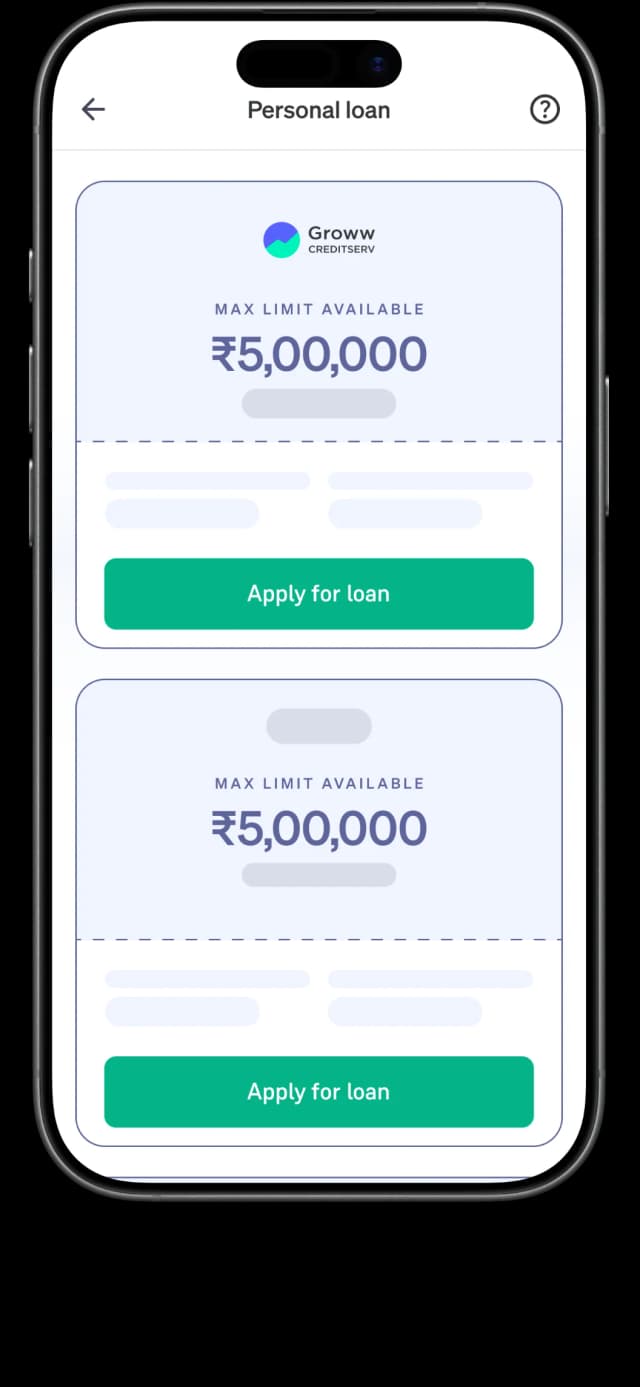
You could get up to ₹2.74L*.
Check real personal loan offers from our lending partners — your estimate is a starting point, not a limit.
- Free to check
- No credit score impact
- Money in your account in minutes